

Key Takeaways
- Arizona’s climate can support pest activity throughout the year.
- Sealing entry points, controlling moisture, and protecting food reduces many pest risks.
- Routine checks can reveal termites, rodents, cockroaches, and other pests early.
- Yard care matters because outdoor hiding places often lead to indoor activity.
- DIY prevention is useful, but repeated or structural pest problems may need professional attention.
Arizona homeowners deal with pest pressure in every season. Intense heat, mild winter stretches, irrigation, and monsoon rain can all drive insects and rodents to search for food, water, shelter, or cooler indoor spaces. A consistent prevention plan is more effective than waiting until pests are already visible. Whether you handle basic maintenance yourself or contact Green Mango Pest Control for persistent concerns, the goal is the same: make your home and yard less inviting to pests before a minor sighting becomes a larger problem.
Why Pest Activity Can Continue All Year in Arizona
Summer heat can drive ants, cockroaches, scorpions, and rodents toward shaded patios, garages, and air-conditioned rooms. During monsoon season, rain can create temporary water sources and damp hiding areas. Even winter may not fully stop activity, especially around warm homes, plumbing leaks, stored items, and food sources. A seasonal routine helps address these changing conditions before pests settle in.
Common Pests Arizona Homeowners May Notice
- Ants: Often follow crumbs, pet food, dripping pipes, and tiny gaps around windows or foundations.
- Scorpions: May shelter in clutter, block walls, wood piles, and cracks, especially where insects are available as prey.
- Cockroaches: Favor kitchens, bathrooms, drains, appliance gaps, and areas affected by irrigation or plumbing leaks.
- Termites: Mud tubes, damaged wood, discarded wings, and moisture near the structure deserve prompt attention.
- Rodents: Mice and rats can enter through roof gaps, garages, vents, and openings around utility lines.
- Mosquitoes: Breed around water held in plant saucers, buckets, clogged gutters, toys, and pool covers.
- Wasps and bees: Can build nests near eaves, sheds, patios, wall voids, and outdoor furniture.
A Room-by-Room Home Inspection
Kitchen and Pantry
Check beneath sinks for damp cabinets and leaks. Sweep crumbs from floors, counters, and appliance gaps, then store cereal, grains, snacks, and pet food in sealed containers. Empty trash regularly and keep the lid closed.
Bathrooms and Laundry Areas
Inspect faucets, drains, toilets, washing machine connections, and water heaters for slow leaks. Improve airflow where moisture tends to linger, and seal openings around plumbing lines when practical.
Garage, Attic, and Storage Spaces
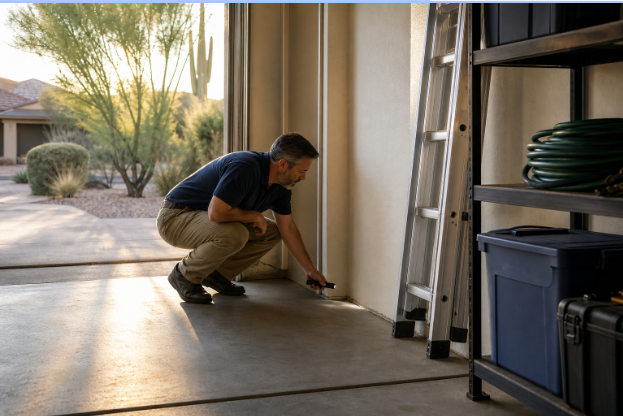
Keep boxes elevated when possible and reduce clutter that creates hiding or nesting areas. Inspect garage-door weather stripping, roof vents, and stored materials for droppings, gnaw marks, shed skins, webs, or unusual odors.
Seal the Places Pests Use to Get Inside
Exclusion is one of the most dependable prevention tools. Small openings can be enough for insects, while rodents can exploit damaged screens, worn door sweeps, and gaps around pipes or cables.
- Inspect exterior doors, window screens, and garage-door seals.
- Check wall penetrations for plumbing, electrical cables, and vents.
- Look for cracks near the foundation, roofline, and exterior trim.
- Repair torn screens and replace worn weather stripping.
- Use appropriate caulk, mesh, or repair materials for the opening and pest risk.
Make the Yard Less Attractive to Pests
Trim branches and shrubs away from exterior walls so pests have fewer sheltered routes into the home. Remove leaf buildup, cardboard, unused pots, wood piles, and other clutter. Keep mulch and soil from resting against siding or wooden structures, repair leaking irrigation lines, and empty containers that hold water. Clean gutters, drains, and pool covers after storms or heavy watering.
Use a Seasonal Prevention Calendar
Winter
Inspect attics, garages, and wall gaps for rodents seeking shelter. Check firewood and stored outdoor materials before bringing them inside, and repair leaks that create protected moisture sources.
Spring
Examine screens, vents, doors, and roof openings. Watch for termite swarmers, discarded wings, and mud tubes, then clear yard debris before warmer weather increases insect activity.
Summer
Keep food and pet supplies secured, close garage doors when not in use, and inspect shaded spaces, irrigation equipment, and outdoor seating for ants, cockroaches, scorpions, and wasp nests.
Monsoon Season
After storms, check for standing water in buckets, toys, plant saucers, gutters, and pool covers. The CDC recommends that households empty and scrub water-holding containers weekly and repair window or door screens to help limit mosquito activity. Dry damp storage areas quickly and inspect for new screen damage or cracks caused by wind and debris.
Early Warning Signs That Need Attention
- Fresh droppings, scratching sounds, grease marks, or gnaw damage.
- Holes in food packaging or stored materials.
- Mud tubes near foundations, patios, or walls.
- Discarded insect wings near doors and windows.
- New nests under eaves, decks, or outdoor furniture.
- Repeated daytime sightings or increased activity after storms and leaks.
When DIY Prevention Makes Sense
Most homeowners can safely handle cleaning, food storage, clutter reduction, light yard trimming, standing water removal, and minor exclusion repairs. If using a pest-control product, choose one approved for the intended location, follow every label direction, and keep it away from children, pets, food, and water sources. Never mix products or apply more than the label permits.
When to Seek Professional Help
Seek trained help when pests repeatedly return, termites may be affecting structural wood, rodents may be inside walls or ceilings, or a large wasp nest is near a high-traffic area. Regular indoor scorpion sightings, difficult-to-locate infestations, and household allergy or health concerns also warrant extra caution.
Questions Homeowners Often Ask
Are pests really a year-round problem in Arizona?
Yes. Activity varies with heat, moisture, and shelter availability, but Arizona conditions can support pest activity for many months of the year.
How often should a home be inspected?
Perform quick visual checks monthly, with closer inspections after storms, plumbing repairs, landscaping changes, or time away from home.
Can a clean home still have pests?
Yes. Cleanliness helps, but pests can also arrive through cracks, drains, roof gaps, irrigation systems, firewood, packages, and neighboring properties.
What is the first step after finding a pest?
Identify it if possible, note where and when it appeared, inspect nearby food and water sources, and look for likely entry points.
Conclusion
Simple, steady habits can reduce many Arizona pest problems. Keep the home sealed, remove moisture and food sources, maintain the yard, and respond quickly to early warning signs. Prevention works best when it becomes part of regular home care in every season. Check doors, windows, vents, and other possible entry points for gaps or damage, especially after extreme heat or storms. Store food in sealed containers, clean spills promptly, and keep trash securely covered. Homeowners should also address standing water, leaking pipes, and overgrown vegetation that can provide pests with shelter or attractants. Regularly inspecting garages, attics, patios, and other less-used areas can help identify activity before it spreads. With consistent attention and timely action, Arizona homeowners can make their properties less inviting to common pests while keeping prevention practical and manageable year-round.